
How to Measure for Shades, Blinds & Drapery

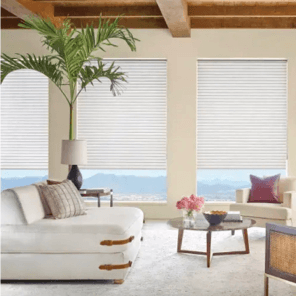
Inside Mount vs. Outside Mount: How to Choose the Best Fit for Your Windows
Before measuring for your shades or drapery, start by deciding whether an inside mount or outside mount works best for your space. Each mounting style offers different visual effects, installation requirements, and functional benefits.
Choose an Inside Mount When:
- Your window frame has sufficient depth to accommodate the product and mounting brackets.
- You prefer a clean, tailored look that sits flush within the window opening.
- The window trim or architectural details are attractive and worth showcasing.
- You want the window treatments to feel integrated without extending beyond the frame.
- The window structure is solid and level enough to support secure installation.
- Your windows are relatively square and evenly shaped for a precise fit.
- The sill or surrounding structure makes outside mounting less practical.
Choose an Outside Mount When:
- The window depth is too shallow for an inside installation.
- The window opening is uneven or irregular in shape.
- You want to conceal unattractive trim or imperfections around the frame.
- Greater light blocking and enhanced privacy are important priorities.
- The window frame is delicate or unsuitable for mounting hardware.
- You want to create the illusion of larger or taller windows.
- You prefer the window covering to sit above or beyond the frame for better coverage when lowered.
Measure the Window for Inside Mount
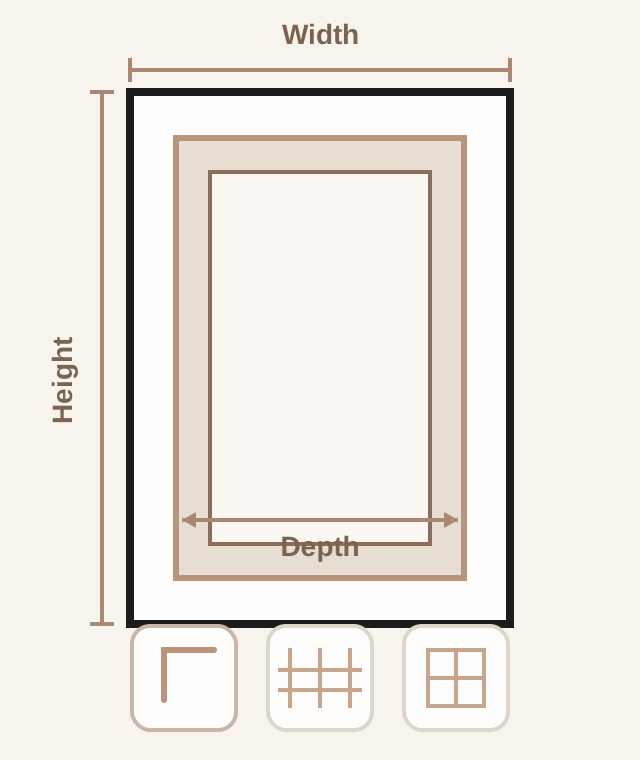
1) Measure the Depth
Measure the depth at the top of the inside window casing (from the front of the casing to the glass or back of the jamb). This tells you whether a secure inside mount is possible and whether a flush mount can be achieved. Minimum depth requirements vary by product — please check the depth requirements chart for each shade type before ordering.
2) Measure the Width
For width, measure the window at three places: across the top, middle, and bottom of the opening. Because window openings can be slightly irregular, take the smallest of these three measurements as your final ordering width. Round each measurement down to the nearest 1/8 inch. The headrail width = ordered width.
3) Measure the Length (Height)
Measure the window’s length (height) at three places: left, center, and right. Use the largest of these three measurements as your ordering length. Round each measurement down to the nearest 1/8 inch. The total shade length should include the headrail.
Note on Side Gaps
You may notice a small gap at each side of the shade when it’s lowered — this is intentional. The fabric is slightly narrower than the headrail so the shade can roll up and down freely without rubbing against the frame.
Inside Mount Requirements for Different Shades with Example (unit: inches)
Inside Mount Options & Ordering Notes
Top Mount (default): The product is mounted at the top of the window jamb. This is the default mounting option when you place an inside–mount order.
Side Mount: If you require side–mount brackets, specify “Side Mount” when ordering. If not specified, the unit will be prepared for Top Mount and side–mount hardware/adjustments will not be applied.
If your window lacks sufficient depth: Consider switching to an outside mount or selecting a product designed for shallower reveals.
Check frame strength: Make sure the window casing or jamb is sturdy enough to accept screws and mounting hardware.
Measure the Window for Outside Mount
1) Check the Space
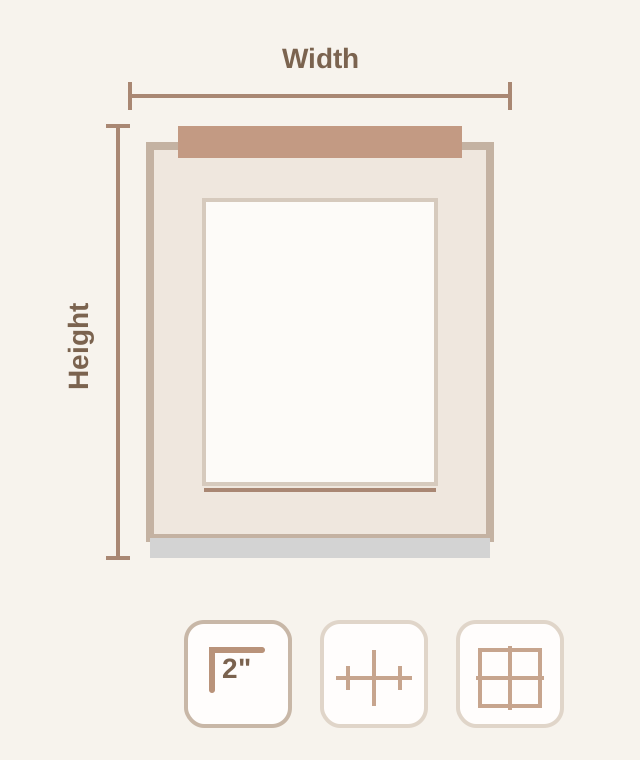
Before measuring, ensure the area above your window has enough flat surface space to mount the headrail and brackets securely. The headrail requires at least 2–3 inches of clearance above the window frame for proper installation.
2) Measure the Width
Measure the exact width of the window frame or trim (from outer edge to outer edge). For optimal light coverage and to minimize light leakage, it is recommended to add 3–6 inches (7.6–15.2 cm) to this measurement. The final width will be your ordering width and includes the width of the headrail.
3) Measure the Length
Measure the height of the window from the top edge of the frame or trim to the bottom edge. To maximize light control and coverage, adding 3–6 inches (7.6–15.2 cm) to this measurement is recommended. Your ordering width is the total shade width, including the headrail.
Tips for Outside Mount
1) Check the Space
Ensure at least 2 inches (5 cm) of flat space above your window frame for bracket mounting. Includes extension brackets for clearing molding or obstructions.
2) Create the Illusion of a Larger Window
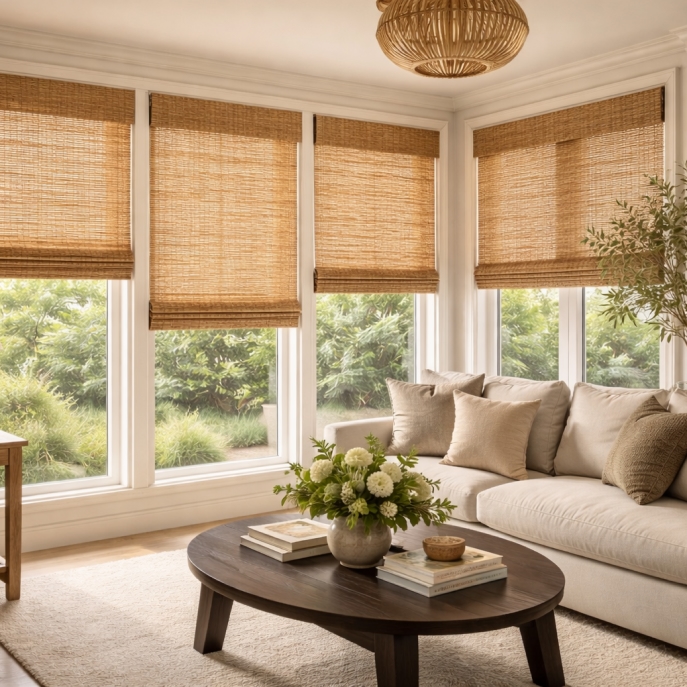
Extending shades beyond the window frame adds visual width and grandeur to any room.
3) Special Note for Roman Shades
Roman shades require 5–8 inches extra in both width and height for proper coverage and a full look.